Walled Gardens, Broken Bridges: How Tech Platforms Engineer Incompatibility for Profit
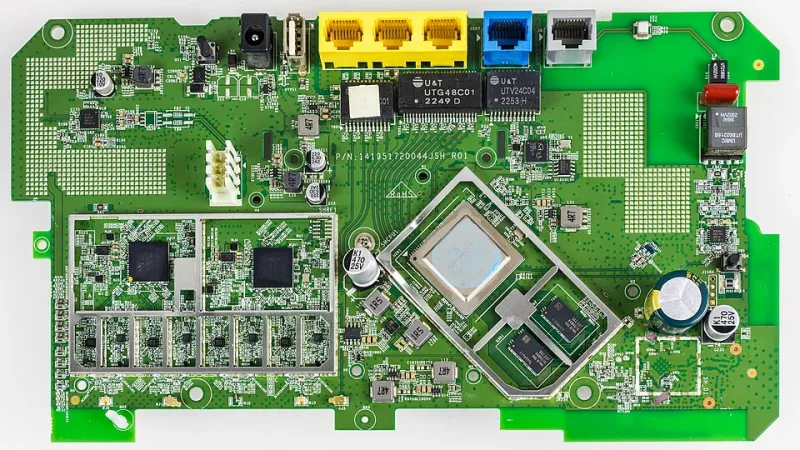
Photo: Raimond Spekking, CC BY-SA 4.0, via Wikimedia Commons
In the spring of 2019, millions of users of Nest smart home devices woke up to discover that their thermostats, cameras, and doorbells had abruptly lost compatibility with third-party apps and services they had been using for years. The culprit was not a technical failure. It was a policy decision — one that followed directly from Google's absorption of Nest into its broader hardware ecosystem. Overnight, a product that had been marketed on its openness became a product that worked best, and in some cases only fully, within Google's own platform.
This pattern — interoperability offered as a feature, then quietly revoked as a competitive lever — is not an anomaly. It is, according to researchers, former engineers, and antitrust economists who spoke with TechToDown, a defining characteristic of how major technology platforms manage their consumer hardware businesses.
The Promise That Was Never the Plan
To understand how the ecosystem trap works, it helps to understand how it is set.
When a platform is new and competing for market share, openness is a strategic asset. Allowing a smart speaker to work with any music service, or a smart display to integrate with any calendar platform, makes the device more attractive to a broader range of consumers. Compatibility, in the early phase of a platform's growth, is a customer acquisition tool.
The calculus changes once scale is achieved. At that point, the same integrations that attracted users become competitive liabilities. Every hour a consumer spends inside a third-party service is an hour they are not spending inside the platform's own offerings — offerings that carry higher margins and generate more proprietary data.
"The interoperability that got you in is exactly the interoperability that becomes inconvenient once they don't need you anymore," said one former smart home product architect, who worked at a major platform company before departing over disagreements about ecosystem strategy. "It's not cynicism to say that. It's just reading the product roadmap."
The Acquisition Playbook
Some of the most instructive case studies in manufactured incompatibility involve corporate acquisitions. When a large platform purchases a smaller company whose products have become popular precisely because of their openness, the subsequent integration frequently degrades that openness in ways that are technically subtle but commercially significant.
The Fitbit acquisition by Google, completed in 2021, offers a representative example. Fitbit had built substantial goodwill among users who valued the device's compatibility with a wide range of health platforms and third-party apps. Post-acquisition, users began reporting the progressive narrowing of that compatibility — a gradual tightening that steered data and functionality toward Google's own health ecosystem. Google maintained that the changes reflected technical improvements. Critics argued, with considerable supporting evidence, that they reflected a deliberate strategy to leverage Fitbit's installed base as a migration pipeline.
Amazon's acquisition of Ring and its subsequent integration into the Alexa ecosystem followed a similar arc. Devices that had previously offered flexible third-party integrations became progressively more optimized for Amazon's own services, with compatibility for competing platforms degraded or discontinued through a series of policy and API changes.
When the Standard Is the Strategy
Beyond acquisitions, platforms exercise control over interoperability through their management of technical standards — the protocols that determine how devices communicate with one another.
The history of smart home standards is, in significant part, a history of platforms attempting to establish proprietary protocols as the dominant framework, then leveraging that dominance to exclude competitors. Apple's HomeKit, Amazon's Alexa ecosystem, and Google Home each developed around distinct architectural approaches that were, by design, resistant to full cross-platform compatibility.
The Matter standard, introduced with considerable fanfare in 2022 as an industry-wide interoperability solution backed by Apple, Google, Amazon, and others, was presented as a resolution to this fragmentation. Skeptics noted, however, that the major platforms' support for Matter was selective — covering basic device functions while preserving proprietary extensions that kept advanced features locked within their respective ecosystems.
"Matter solved the problem of whether your light bulb turns on," said one smart home developer who has worked with multiple platform APIs. "It did not solve the problem of whether your automations, your voice commands, your data, and your advanced integrations work across platforms. Those are still siloed. That's not an accident."
The Consumer Cost of Fragmentation
The practical consequences of deliberate ecosystem fragmentation fall most heavily on consumers who have invested significantly in smart home infrastructure — a category that, according to recent industry surveys, now includes approximately one in three American households.
When a platform changes its integration policies, consumers face a choice between two forms of loss: absorbing the cost of replacing devices that no longer function as intended within their existing setup, or absorbing the cost of migrating their entire ecosystem to a new platform. In either case, the financial burden falls on the consumer rather than the manufacturer that made the unilateral decision to alter compatibility.
This dynamic is particularly acute for consumers who have built automations and routines across multiple device categories. A household that has invested in smart locks, smart lighting, a connected thermostat, and a video doorbell from different manufacturers — all integrated through a single platform — is extraordinarily vulnerable to any policy change that breaks those integrations. The cost of replacing even one category of device can run into hundreds of dollars. Replacing all of them is, for many American families, simply not financially feasible.
The Regulatory Blind Spot
Despite growing awareness of these dynamics among consumer advocates and antitrust researchers, the regulatory framework governing smart home interoperability in the United States remains underdeveloped.
The European Union has moved more aggressively on this front, with the Digital Markets Act imposing interoperability requirements on designated "gatekeeper" platforms. In the US, the Federal Trade Commission has identified ecosystem lock-in as a concern in several investigative reports, but legislative action remains stalled.
In the absence of enforceable interoperability standards, the major platforms retain effective discretion over which connections work, for how long, and on whose terms. That discretion, exercised consistently in the direction of competitive advantage, is what transforms a walled garden from a metaphor into a mechanism of control.