Wired to Obey: The Deliberate Science of Smartphone Notifications and the Collapse of American Willpower
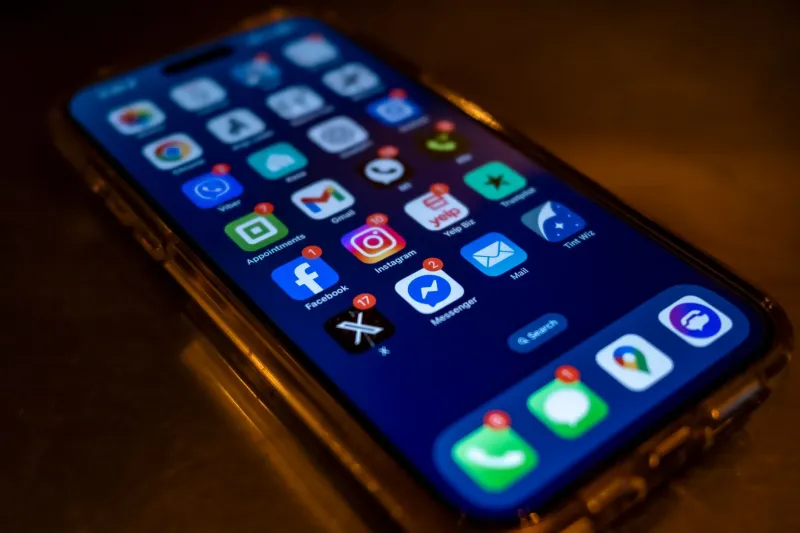
Every time a smartphone buzzes on an American nightstand at 11:43 p.m., something deliberate has occurred. Not a glitch. Not a coincidence. A calculated intervention, engineered by teams of behavioral scientists, product managers, and data analysts whose professional objective is to ensure that you cannot ignore what just happened on your screen.
The notification, in its modern form, is not a convenience feature. It is infrastructure for attention extraction — and the companies that built it have spent more than a decade refining its psychological precision while telling the public it exists for their benefit.
The Architecture of Interruption
To understand how notification systems actually function, it helps to understand what they were originally designed to do — and then to examine where that design went. Early mobile alerts were utilitarian: a calendar reminder, a text message, a low battery warning. The purpose was informational. The user remained in control.
That model collapsed somewhere around 2012, when platform companies began recognizing that notifications could serve a second, far more commercially valuable function: re-engagement. If a user had not opened an app in six hours, a well-timed alert could reverse that. If engagement metrics were declining on a Tuesday afternoon, a push notification campaign could spike them within minutes.
A former product manager at a major social platform, who requested anonymity citing ongoing industry employment, described the internal evolution bluntly. "We stopped thinking about notifications as information delivery," they said. "We started thinking about them as levers. The question became: what message, at what time, triggers the fastest return to the app?"
The answer to that question required understanding human neurology at a level of granularity most users would find deeply uncomfortable.
Dopamine by Design
Neuroscientists have long documented the brain's response to unpredictable reward signals. The dopaminergic system — the neural circuitry associated with anticipation and motivation — responds most powerfully not to guaranteed rewards, but to variable ones. A slot machine produces a stronger compulsive pull than a vending machine precisely because the outcome is uncertain. Tech platforms discovered this principle early and embedded it structurally into notification behavior.
Dr. Anastasia Vreeland, a cognitive neuroscientist at a research university in the Pacific Northwest who has studied digital interruption patterns for nearly a decade, describes the mechanism with clinical directness. "What these systems are doing is manufacturing artificial anticipation," she told TechToDown. "The notification arrives before you know what it contains. That gap — between the alert and the reveal — activates the same neural pathways associated with reward-seeking behavior. It is not metaphorically similar to addiction circuitry. It is literally the same circuitry."
Platforms have refined the timing of these triggers using behavioral data at a scale no academic researcher could replicate. They know, from billions of data points, that a notification delivered within forty minutes of a user's typical morning wake time produces significantly higher open rates than one delivered at a standardized hour. They know that messages framed around social validation — "someone liked your post," "you have a new follower" — outperform purely informational alerts by measurable margins. They know that a notification referencing an unresolved social interaction exploits anxiety more effectively than one referencing content.
This is not speculation. Internal documents from multiple platform companies, surfaced through litigation and whistleblower disclosures over the past several years, have confirmed that engagement optimization — the polite industry term for compulsion engineering — was a primary design objective, not a byproduct.
The Consent Fiction
Tech companies have long defended their notification practices by pointing to user consent. When you install an app, you are asked whether to allow notifications. You can say no. You can adjust settings. You are, the argument goes, in control.
This framing deserves scrutiny.
The consent prompt typically appears during onboarding, when a user is least informed about what they are agreeing to and most motivated to proceed quickly. The interface is designed to make approval the path of least resistance. On iOS, the default prompt presents "Allow" and "Don't Allow" — but the visual weight, color, and placement of these options has historically favored the permissive choice. On Android, notification permissions have been granted by default for most of the platform's history, requiring active effort to revoke.
More fundamentally, consenting to notifications as a category tells a user nothing about the behavioral optimization that will govern how those notifications are deployed. A user who agrees to receive alerts from a news application has not agreed to receive them at intervals calculated to maximize anxiety-driven re-engagement. The consent architecture, in this sense, functions as a legal shield rather than a genuine instrument of user agency.
The former product manager put it plainly: "No one was clicking 'allow notifications' thinking they were authorizing a team of data scientists to figure out the exact moment their willpower was lowest."
Regulatory Paralysis
The Federal Trade Commission has, on multiple occasions, signaled concern about manipulative design practices in consumer technology. The broader concept of "dark patterns" — interface designs that deceive or coerce users — has received increasing attention from both the FTC and state-level regulators in California and Washington. In 2022, the FTC published a report documenting dark pattern prevalence across digital platforms, noting that notification manipulation featured prominently among the tactics identified.
What has followed is a familiar pattern of institutional inaction.
No major platform has faced enforcement action specifically targeting notification engineering. No federal legislation governing the behavioral optimization of push alerts has advanced through Congress. The closest analog, the Children's Online Privacy Protection Act and its proposed updates, addresses data collection from minors but does not speak directly to compulsion-by-design mechanics that affect users of all ages.
Industry lobbying has played a measurable role in this stasis. The major platform companies collectively spent hundreds of millions of dollars on federal lobbying between 2018 and 2024, with a significant portion directed at shaping the terms of any potential digital regulation. The result is a regulatory environment that has generated considerable documentation of harm while producing almost no enforceable constraints on the practices producing it.
Dr. Vreeland is not optimistic about near-term change. "The companies have every financial incentive to continue and no legal incentive to stop," she said. "That equation doesn't resolve itself without external pressure that currently doesn't exist at the necessary scale."
The Cost in Hours and Health
The aggregate consequences of notification-driven attention disruption are not trivial. Research published in peer-reviewed journals over the past five years has linked high notification volume to elevated cortisol levels, degraded sleep quality, reduced capacity for sustained concentration, and measurable increases in self-reported anxiety. A 2023 study tracking smartphone usage patterns among working-age Americans found that the average user experienced more than eighty notification-triggered interruptions per day — a figure that, when compounded across a year, represents a staggering transfer of cognitive resource from the individual to the platform.
The platforms, of course, do not absorb this cost. They monetize it. Every re-engagement event produces additional advertising inventory, additional behavioral data, and additional leverage over the attention economy that funds the entire enterprise.
What Americans are left with is a technology embedded in nearly every aspect of daily life, optimized at a neurological level to serve corporate revenue objectives, operating largely beyond the reach of meaningful oversight, and defended by a consent architecture that provides the appearance of choice while systematically undermining the conditions under which genuine choice is possible.
The notification arrives. The screen lights up. Somewhere in the prefrontal cortex, rational deliberation loses another small battle it was never quite set up to win.
That outcome was not accidental. It was the point.