Charging Chaos by Design: The Hidden Industry Strategy Behind Your Drawer Full of Useless Cables
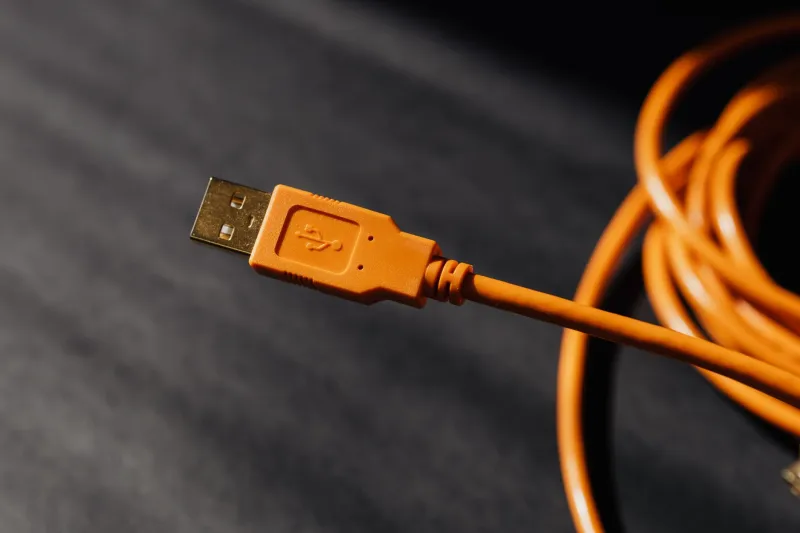
Somewhere in your home, there is almost certainly a tangle of cables that no longer connect to anything you own. A micro-USB cord from a phone you replaced three years ago. A proprietary magnetic charger from a laptop the manufacturer discontinued. A dongle that once bridged two standards, now obsolete because both standards have since changed. This is not an accident. According to supply chain analysts, former industry engineers, and internal communications reviewed by TechToDown, the fragmentation of charging standards across consumer technology is one of the most methodically maintained forms of artificial lock-in in the modern tech economy.
The Myth of the Technical Imperative
The standard defense offered by manufacturers when pressed on charging incompatibility is straightforward: different devices have different power requirements, and the connectors reflect genuine engineering constraints. Apple, for instance, spent years arguing that its proprietary Lightning connector offered advantages in durability and data transfer that a universal standard could not match. Samsung and other Android manufacturers cycled through micro-USB, USB-C variants, and proprietary fast-charging protocols under similar pretexts.
But engineers who have worked inside these ecosystems describe a different calculus. "The technical justifications are real, but they're selectively applied," said one former hardware engineer at a major US consumer electronics firm, who spoke on condition of anonymity due to nondisclosure agreements. "When it was convenient to converge on a standard, they converged. When divergence served the business model, the technical reasons to diverge suddenly became very compelling."
The evidence supports this characterization. USB-C, a genuinely universal standard developed by the USB Implementers Forum, has existed in a mature form since 2014. Yet as recently as 2022, major manufacturers were still shipping flagship devices with proprietary connectors or implementing USB-C in ways that deliberately limited cross-brand compatibility. The technical capability for standardization has existed for years. The commercial will has not.
Following the Money
The financial incentives behind fragmentation are not subtle. Apple's MFi (Made for iPhone) licensing program, which governs which third-party manufacturers can produce compliant accessories, has historically generated revenues estimated in the hundreds of millions of dollars annually. Certified Lightning cables routinely retailed for two to four times the cost of equivalent micro-USB cables. The margin on accessories—cables, adapters, docks—has consistently outperformed the margin on the devices themselves.
Beyond direct accessory revenue, incompatible charging standards function as a switching cost. A consumer who has invested in a collection of Apple-certified chargers, car adapters, and bedside docks faces a meaningful financial penalty when considering a move to a competing platform. This is not incidental to the strategy—it is the strategy. Lock-in through infrastructure investment is among the oldest playbooks in the technology industry, and charging standards are simply its most tangible expression.
Internal communications from a 2019 industry standards working group, portions of which were obtained by TechToDown through a source familiar with the proceedings, reveal that at least two major manufacturers actively lobbied against specific interoperability provisions that would have reduced accessory incompatibility. Their stated objections centered on quality control and consumer safety. Their private concerns, according to the source, were substantially more commercial.
Regulatory Pressure and the Art of the Delay
The European Union has been the most aggressive governmental body in confronting charging fragmentation. After years of failed voluntary commitments from manufacturers, the EU passed legislation in 2022 mandating USB-C as the common charging standard for a wide range of consumer devices sold in its territory, with a compliance deadline phased through 2024 and 2025. The legislation was widely described as a landmark consumer protection measure—and was just as widely criticized by manufacturers as regulatory overreach.
In the United States, progress has been considerably slower. The Federal Communications Commission and the Federal Trade Commission have both received consumer complaints and advocacy group petitions related to charging incompatibility, but no binding federal standard has emerged. Congressional interest has surfaced periodically—a 2021 Senate inquiry touched on the issue—but has not produced legislation. The result is a regulatory environment in which American consumers remain more exposed to deliberate fragmentation than their European counterparts.
Manufacturers have not been passive in this environment. Lobbying disclosures reviewed by TechToDown show sustained investment in opposing interoperability mandates at both the federal and state level. The arguments deployed against such mandates—innovation stifling, safety risks, market distortion—are structurally identical to those used against right-to-repair legislation, net neutrality rules, and other consumer-protection technology policies. The consistency of the playbook is itself instructive.
The Regional Dimension
Charging fragmentation is not merely a product-line phenomenon. It operates geographically as well. Voltage and frequency differences between the United States (120V, 60Hz) and much of the rest of the world (220-240V, 50Hz) create legitimate technical distinctions. But manufacturers have historically used these distinctions as cover for introducing additional proprietary incompatibilities that serve no technical purpose beyond market segmentation.
A traveler carrying a device purchased in the US may find that a charger purchased abroad, even one meeting the same nominal standard, fails to function at full efficiency or triggers error messages on the device. In several documented cases, devices have been programmed to recognize and reject non-certified chargers—not because those chargers were unsafe, but because they were uncertified. The safety argument, invoked constantly in these contexts, collapses under scrutiny: the rejected chargers frequently meet or exceed the electrical specifications of their certified equivalents.
What Accountability Would Actually Look Like
The EU's USB-C mandate offers a partial model, but supply chain experts caution that connector standardization alone is insufficient. Manufacturers have already begun differentiating through charging speed protocols—proprietary fast-charging implementations that, while using USB-C connectors, require brand-specific chargers to unlock their full performance. The connector converges; the ecosystem lock-in migrates upstream.
Meaningful accountability would require not just connector standardization but interoperability mandates covering charging protocols, data transfer specifications, and accessory certification processes. It would require transparency in licensing terms and an end to the practice of programming devices to reject compliant third-party accessories on pretextual safety grounds.
For American consumers, the most immediate step is regulatory engagement. The FTC's ongoing review of anti-competitive practices in consumer technology represents an opening. So does the growing bipartisan interest in right-to-repair legislation, which shares structural roots with the charging incompatibility problem: both are expressions of a corporate philosophy that treats the consumer's device as a perpetual revenue channel rather than a purchased product.
The drawer full of useless cables is not a byproduct of technological progress. It is a monument to a business model. Understanding it as such is the beginning of demanding something better.