Softcoded Into Obsolescence: How Operating Systems Are Quietly Retiring Your Hardware
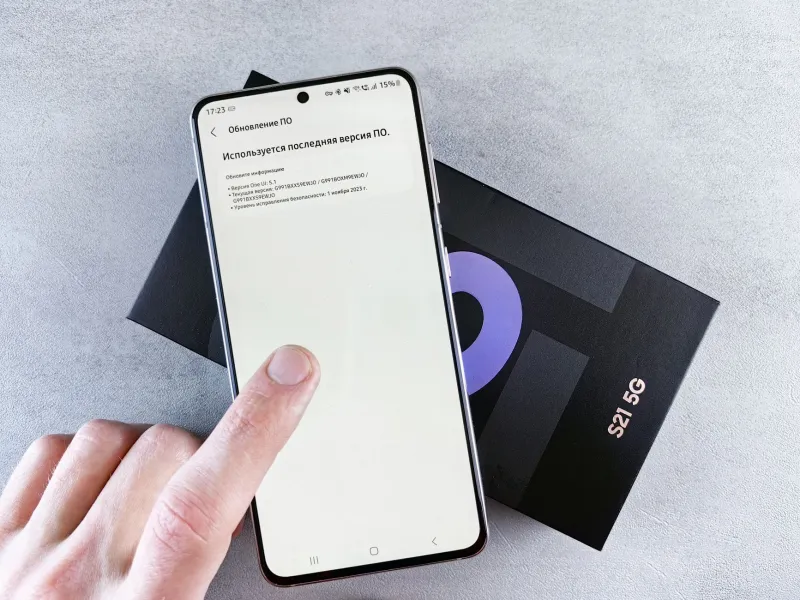
The phone still powers on. The screen responds to touch. The camera captures a clear image. By every mechanical measure, the device works. Yet a growing number of Americans are being told—by app stores, by operating systems, by the very platforms they depend on daily—that their hardware is no longer acceptable. Not broken. Not damaged. Simply incompatible.
This is not a coincidence. It is, according to former software engineers and hardware architects who spoke with TechToDown, a pattern embedded into the product roadmap from the start.
A System Designed to Expire
When a major operating system drops support for a device, the official justification almost always cites hardware limitations—insufficient processing power, inadequate memory, outdated security architecture. But multiple former engineers who worked at large consumer electronics firms describe a more deliberate process.
"There were absolutely decisions made in code that had nothing to do with what the chip could handle," said one former software architect who worked on mobile platforms for over a decade and requested anonymity due to ongoing consulting relationships with industry clients. "Certain API calls were deprecated not because the hardware couldn't execute them, but because maintaining backward compatibility was deprioritized in favor of pushing ecosystem upgrades."
In practical terms, this means that when an operating system update introduces new framework dependencies, older devices—even those with capable processors—cannot run current versions of popular apps. The apps themselves are not technically demanding. The incompatibility is architectural, not physical.
A 2022 analysis by the European Environmental Bureau found that software-induced obsolescence accounts for a significant share of premature device retirement globally. While the study focused on European markets, the dynamics it describes are equally, if not more, pronounced in the United States, where flagship device replacement cycles are aggressively marketed and subsidized through carrier financing programs.
The App Store as a Compliance Mechanism
Beyond operating system updates, application marketplaces have become a secondary enforcement layer. Both major mobile app distribution platforms in the United States require developers to target recent operating system versions as a condition of continued listing. Developers who fail to update their apps face removal—even if the app functions perfectly on older software.
This policy, framed as a security and quality measure, has a downstream effect that receives far less scrutiny: it forces users on older operating systems to lose access to essential applications. Banking apps, healthcare portals, government services, and communication tools have all been withdrawn from older OS versions under this framework.
"The mandate is presented as protecting users," said a mobile developer who builds applications for financial services clients. "But the practical outcome is that someone running a three-year-old phone on an unsupported OS loses access to their bank's app. That's not a security improvement for that user. That's a forced upgrade."
For users who cannot afford a new device, the forced upgrade is not an option. It is a wall.
The Economic Fault Line
The burden of software-induced obsolescence does not fall evenly. Research from the Pew Research Center consistently shows that lower-income Americans are more likely to rely on smartphones as their primary or sole means of internet access. They are also more likely to hold onto devices longer—often four to six years, compared to the two-year cycles common among higher-income consumers.
This demographic is disproportionately affected when platforms retire software support. A household earning under $30,000 annually does not treat a phone as a two-year consumer product. It is infrastructure. When that infrastructure is rendered functionally inoperable by a software decision made in a corporate boardroom, the cost is not merely inconvenience.
Social service applications, telehealth platforms, job application portals, and school communication tools have all migrated to minimum OS requirements that exclude devices still in active use by millions of Americans. The digital divide, so frequently discussed as a connectivity problem, has a second dimension that receives far less attention: a compatibility problem engineered by the very companies that claim to be bridging it.
Backend Deprecation: The Invisible Kill Switch
Operating system support and app store policies are visible mechanisms. A third, less-discussed tool is backend server deprecation—the process by which companies retire the server-side infrastructure that older app versions depend on.
When a company updates its backend API and discontinues support for older client versions, users running those older versions lose functionality entirely—even if the app is still installed and the operating system technically supports it. This process happens silently, without user notification, and is entirely within the company's discretion.
"There is no regulatory requirement to announce a backend deprecation," noted one software consultant who has worked with consumer tech companies on platform migration projects. "A company can simply turn off an endpoint, and overnight, an older version of an app stops working. Users have no recourse and often no explanation."
This mechanism is particularly common in the smart home and connected device sectors, where manufacturers have discontinued cloud services for functional hardware, rendering expensive devices inoperable. The Federal Trade Commission has received complaints related to this practice, but no comprehensive regulatory framework currently addresses it.
What Accountability Looks Like
Several European nations have moved toward mandating minimum software support periods for consumer devices—a policy approach that has not gained equivalent traction in the United States. Proposed right-to-repair legislation at the federal and state levels has occasionally touched on software interoperability, but the specific issue of deliberate software incompatibility remains largely outside the legislative conversation.
Some advocates argue that disclosure requirements would be a meaningful first step: requiring manufacturers to publish clear, binding commitments to software support timelines at the point of sale, and to provide technical documentation sufficient for third parties to maintain compatibility after official support ends.
For now, millions of Americans navigate a system in which the device they purchased, the device that still powers on and responds to touch, is being quietly and systematically retired—not by time, not by wear, but by code.