The Television That Watches Back: Inside the Covert Surveillance Architecture of America's Smart TVs
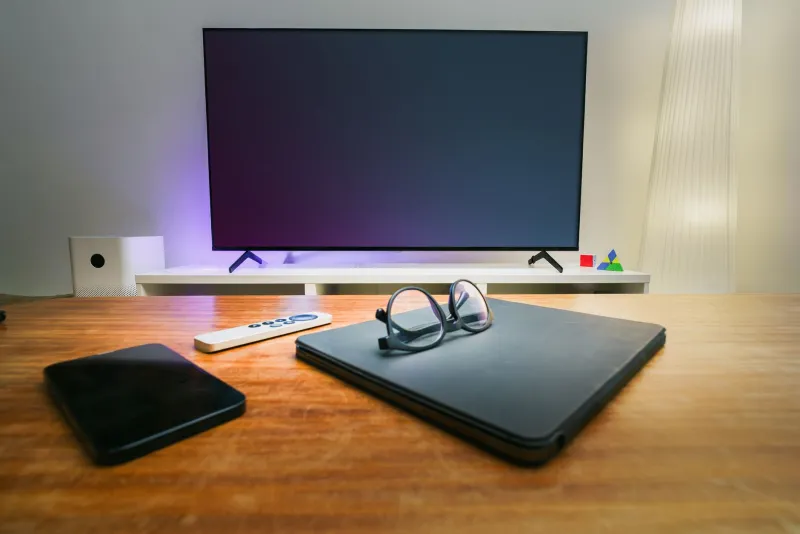
For most of the twentieth century, the television was a one-way medium. Signals traveled from broadcasters into living rooms, and nothing traveled back. That relationship ended quietly sometime around 2012, when internet-connected televisions began shipping in volume across the United States. Today, approximately 87 percent of American households own at least one smart TV. The majority of those households have no meaningful understanding of what their television is transmitting — or to whom.
Automatic Content Recognition: The Technology You Agreed to Enable
The most pervasive surveillance mechanism built into modern smart televisions is a technology called Automatic Content Recognition, or ACR. ACR works by capturing samples of whatever is displayed on a television screen — whether from a cable box, a streaming app, a gaming console, or a Blu-ray player — and comparing those samples against a reference database to identify the content being watched. The process occurs continuously, typically every few seconds, and the resulting data is transmitted to the manufacturer's servers.
The practical implication is significant: your television does not merely know what you stream through its native apps. It knows what you watch on every input. A household that watches cable news through a set-top box, streams films through an external device, and plays video games through a console is providing a comprehensive behavioral profile to its television manufacturer regardless of which platform delivers the content.
Vizio was the first major manufacturer to face regulatory consequences for this practice. In 2017, the Federal Trade Commission and the New Jersey Attorney General reached a $2.2 million settlement with Vizio after finding that the company had collected viewing data on 11 million televisions without adequate consumer disclosure. Vizio's ACR system, branded as "Smart Interactivity," was enabled by default. The settlement required disclosure and opt-in consent going forward. The underlying business model, however, remained intact.
Samsung, LG, and Roku have all operated comparable ACR systems. The data collected is sold to advertisers and data brokers, enabling what the industry calls "cross-screen targeting" — the practice of serving advertisements on smartphones, computers, and other devices based on viewing behavior observed on the television.
What the Terms of Service Actually Say
Samsung's smart TV privacy policy, which users nominally agree to during device setup, contains language that has drawn repeated scrutiny from privacy researchers. A 2015 version of the policy included a passage advising users that "if your spoken words include personal or other sensitive information, that information will be among the data captured and transmitted to a third party" — a reference to the television's voice recognition feature. The passage was widely reported and subsequently revised, though the underlying data collection architecture was not fundamentally altered.
LG's current privacy policy for its ThinQ-enabled televisions discloses that the company collects "information about the content you view," "device usage information," and data from "connected devices and services." The policy runs to several thousand words. Consumer research consistently finds that fewer than ten percent of users read smart device privacy policies in their entirety.
Roku, whose operating system powers televisions manufactured by TCL, Hisense, and Sharp in addition to Roku's own branded hardware, operates one of the most extensive data collection programs in the connected television market. Roku's advertising platform, OneView, allows advertisers to target audiences based on viewing data, purchase history obtained from data broker partnerships, and household demographic information. Roku's 2023 annual report identified advertising as the company's primary growth driver, generating $3.6 billion in platform revenue — nearly double its hardware sales.
The business model is straightforward: the television is sold at or near cost, and the margin is recovered through the sale of the audience's attention and behavioral data over the life of the device.
Cameras, Microphones, and the Biometric Frontier
Beyond viewing data, an increasing number of smart televisions incorporate cameras and microphones whose data collection practices extend well beyond their advertised functionality. Built-in microphones, present in virtually all voice-enabled smart TVs, are designed to remain in a low-power listening state awaiting activation phrases. Security researchers have documented cases in which these microphones transmitted audio data to manufacturer servers in the absence of deliberate user activation.
Several higher-end television models, including certain Samsung and LG units, incorporate cameras intended for video calling applications. These cameras are not always physically retractable, and their operational status is not always clearly indicated to users. In 2020, security researchers at Consumer Reports identified vulnerabilities in smart TV platforms that would have allowed external actors to access camera and microphone functions without user awareness. Manufacturers issued patches, but the structural vulnerability — a networked device with audio and video capture capability in the most private shared space in an American home — persists.
Facial recognition technology represents the next frontier of smart television data collection. Samsung has filed patents describing systems capable of identifying individual household members by facial geometry and adjusting content recommendations accordingly. The technology would allow advertisers to target not just a household but specific individuals within it based on their physical presence in front of the screen. No major manufacturer has publicly announced deployment of such a system in consumer products. Several have filed the patents to do so.
What You Can Actually Do
The surveillance architecture built into modern smart televisions is extensive, but it is not entirely beyond consumer control. The following measures, while imperfect, meaningfully reduce the data collection exposure of a connected television:
Disable ACR during setup. Most manufacturers present an option to disable Automatic Content Recognition during the initial device configuration process. This option is typically not prominently labeled. On Samsung devices, it is found under Settings > Support > Terms & Privacy > Viewing Information Services. On LG televisions, it appears under Settings > All Settings > General > Live Plus. On Vizio, it is located under System > Reset & Admin > Viewing Data.
Segment the television on your network. Placing your smart TV on a separate Wi-Fi network or VLAN from other household devices limits the data it can observe about your broader network activity. Many modern home routers support this configuration.
Use an external streaming device. Connecting an Apple TV, Amazon Fire Stick, or Chromecast to a "dumb" television — or to a smart TV used purely as a display — transfers the data collection relationship from the television manufacturer to the streaming device manufacturer. This does not eliminate data collection; it changes who collects it.
Cover or disconnect cameras. Physical camera covers cost less than five dollars and eliminate the risk of unauthorized visual access entirely. Microphones are more difficult to physically disable without voiding warranties, but disabling voice assistant features in the television's settings reduces — though does not eliminate — microphone transmission.
A Regulatory Environment That Has Not Kept Pace
The FTC's 2017 action against Vizio established a precedent but not a durable standard. No comprehensive federal legislation specifically governing smart television data collection has been enacted. California's Consumer Privacy Act and its 2020 expansion, the CPRA, provide some protections for California residents, including the right to opt out of the sale of personal information. Those protections do not apply in the remaining 49 states.
The television in your living room was once the most passive object in the room. It is now among the most active. The data it collects about your household — your viewing habits, your schedules, your demographics, and potentially your faces — flows continuously into advertising ecosystems that most Americans cannot see, much less audit. Until federal privacy law catches up with the technology already deployed in tens of millions of homes, the burden of protection falls entirely on the consumer.