The Slowdown You Weren't Supposed to Notice: How Software Updates Are Quietly Aging Your Smartphone
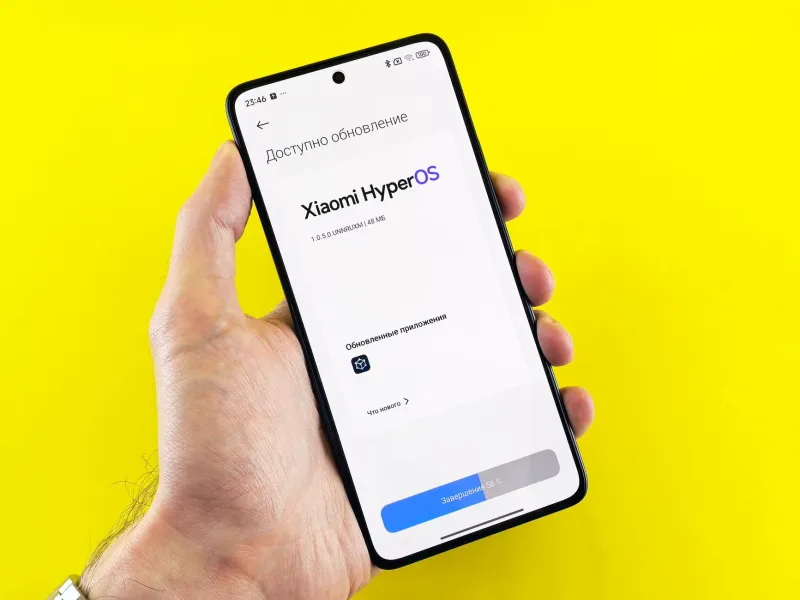
There is a particular frustration familiar to tens of millions of American smartphone users: a device that felt fast and responsive eighteen months ago now hesitates before opening apps, stutters during scrolling, and drains its battery by midafternoon. The phone has not been dropped. The screen is uncracked. The hardware is, by any objective measure, the same collection of silicon and glass it was when it left the box. And yet it performs as though it has aged a decade.
The manufacturer's explanation, when one is offered at all, is typically framed around battery chemistry and the technical demands of modern software. These explanations are partially true. They are also incomplete in ways that serve the manufacturer's commercial interests considerably more than the consumer's.
The Apple Precedent and What It Revealed
In December 2017, a software developer named John Poole published benchmark data demonstrating that iPhones running iOS 10.2.1 and later showed markedly reduced CPU performance compared to devices running older operating system versions. The performance reduction correlated with battery age, and it was not disclosed in Apple's release notes. Apple confirmed the practice, describing it as a feature designed to prevent unexpected shutdowns in devices with degraded batteries.
The subsequent legal and regulatory fallout was substantial. Apple paid $113 million to settle a multistate investigation led by 34 state attorneys general. The company paid an additional $500 million to settle a class action lawsuit covering U.S. iPhone owners. The European Commission launched its own investigation. France fined Apple 25 million euros under its anti-obsolescence statutes.
What the Apple case established, beyond its specific legal consequences, was a proof of concept: operating system updates can and do alter the performance characteristics of hardware in ways that users are not informed about, and the commercial incentive to do so is directly legible in device upgrade cycle data.
The Benchmark Gap: What Performance Tests Miss
Following the Apple controversy, independent technology journalists and researchers began applying more rigorous scrutiny to post-update performance across Android manufacturers as well. The findings were not exculpatory.
Benchmark applications such as Geekbench, AnTuTu, and 3DMark measure processor throughput, memory bandwidth, and graphics performance under controlled conditions. These tests are useful for comparing devices and establishing performance baselines. They are poorly suited, however, to detecting the specific type of degradation that users actually experience — because that degradation is often behavioral rather than absolute.
Manufacturers can tune operating system schedulers to deprioritize performance in everyday usage scenarios while maintaining full benchmark performance when the device detects a testing workload. This technique, known colloquially as "benchmark cheating" when applied offensively, has a defensive analog: a device can be tuned to perform well under benchmark conditions while delivering reduced performance in the day-to-day interactions that determine user perception.
A 2022 investigation by the European consumer organization Which? tested 13 Android smartphones from Samsung and Motorola over an extended period following major operating system updates. The organization found that several devices showed statistically significant reductions in browser loading speed and app launch times following updates, despite no changes to the underlying hardware. Samsung disputed the methodology. The data remained.
Thermal Management as a Performance Lever
One of the less-examined mechanisms through which updates alter device behavior is thermal throttling policy — the rules that govern how aggressively a processor reduces its clock speed in response to heat. Every modern smartphone processor throttles under sustained load to prevent damage. The aggressiveness of that throttling, and the temperature thresholds that trigger it, are software-defined parameters that manufacturers can adjust through operating system updates.
A device that ships with a relatively permissive thermal policy — one that allows the processor to sustain high performance for longer periods before throttling — can be updated to a more conservative policy without any user-visible notification. The practical effect is a device that handles intensive tasks more slowly than it did when new. The manufacturer's explanation, if one is provided, will reference "improved thermal management" or "enhanced battery longevity" — descriptions that are technically accurate and contextually misleading.
"The language manufacturers use is always framed as a benefit," said one software engineer with experience at a major Android handset maker, speaking on condition of anonymity. "Improved efficiency. Better battery life. Optimized performance. None of those phrases communicate to a consumer that their phone is going to feel slower. But that's what some of those changes mean in practice."
The Economics of the Update Cycle
The financial architecture surrounding smartphone software support makes the incentive structure transparent. A flagship smartphone sold in the United States carries a retail price between $800 and $1,400. The manufacturer's hardware margin on that device is typically highest at the point of sale and declines as components age and competition intensifies. Revenue from a customer who upgrades every two years is structurally superior to revenue from a customer who keeps a device for four.
Against this backdrop, the decision to extend software support — Samsung now promises seven years of Android updates for its Galaxy S series, Google promises seven years for the Pixel 8 line — appears generous. And in important respects it is: security patches delivered over an extended period provide genuine consumer protection. But the content of those updates, and their effect on device performance, is a separate question from their duration.
A customer who receives seven years of updates but finds their device subjectively unusable after three years has not received seven years of useful product life. They have received three years of use and four years of anxiety management — a constant stream of update notifications that signals ongoing manufacturer attention without necessarily delivering ongoing manufacturer commitment to the device's performance.
What Regulators Are Beginning to Examine
The European Union's Right to Repair regulation, which took effect in 2024, includes provisions requiring manufacturers to maintain device performance following software updates. Specifically, the regulation prohibits updates that "impair the functionality" of devices covered under the legislation. Enforcement mechanisms and precise definitions remain works in progress, but the regulatory direction is clear.
In the United States, no equivalent federal standard exists. The FTC has authority to pursue deceptive trade practices claims against manufacturers who misrepresent the effects of software updates, and the Apple settlement demonstrated that this authority can be exercised. However, proactive disclosure requirements — rules that would require manufacturers to specify the performance implications of updates before installation — have not been enacted.
Several state legislatures, including Colorado and Oregon, have passed right-to-repair laws that address hardware serviceability. Performance transparency in software updates has not yet found equivalent legislative traction.
Reading the Release Notes You Were Never Meant to Read
The most immediate practical defense available to American consumers is also the most tedious: reading update changelogs before installing them. Manufacturer changelogs are frequently vague, but third-party sources including Android Police, 9to5Mac, and iFixit's technical teardowns often document specific system-level changes that manufacturers do not highlight in consumer-facing communications.
Delaying major operating system updates — as distinct from security patches, which should be applied promptly — allows time for the independent technical community to characterize their effects on device performance. This is not a perfect solution. It requires technical literacy that most consumers reasonably do not possess and should not need to develop simply to understand what their phone is doing.
The broader accountability failure here is structural. Manufacturers control the update pipeline, write their own changelogs, define their own performance benchmarks, and set their own upgrade incentive structures. The consumer sits at the end of that chain with a device that feels slower than it used to and no reliable mechanism for determining whether that deterioration was inevitable or engineered. Until disclosure requirements change that calculus, the phone in your pocket is being managed — and not always in your interest.

