Interrupted by Design: The Hidden Architecture Keeping Americans Tethered to Their Screens
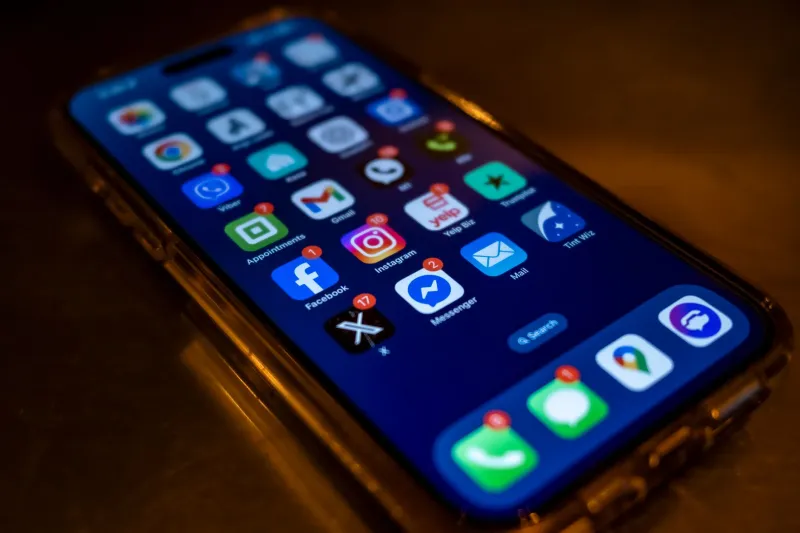
At 7:43 on a Tuesday morning, before most Americans have finished their first cup of coffee, their phones have already interrupted them an average of eleven times. A badge counter here. A push alert there. A red dot pulsing on an icon that, by any reasonable measure, has nothing urgent to report. These are not coincidences. They are the outputs of deliberate, extensively tested, and ruthlessly optimized systems — systems whose architects understood, from the earliest stages of development, that the goal was not to inform users but to condition them.
The notification, in its modern form, is one of the most consequential and least scrutinized pieces of behavioral engineering in American life. And the companies that built it have spent years ensuring that you cannot fully turn it off.
The Engagement Imperative
To understand why notifications are designed the way they are, it is necessary to understand the business model they serve. For platforms whose revenue depends on advertising, the fundamental currency is not data — it is attention. Every second a user spends inside an application represents a monetizable moment. Every second spent away does not.
Former product managers and engineers at several major platforms, speaking to TechToDown on condition of anonymity due to ongoing non-disclosure agreements, describe internal cultures where notification volume was treated as a direct proxy for platform health. One former employee of a major social media company recalled weekly reviews in which teams were evaluated on "re-engagement rates" — a metric that measured how successfully notifications had pulled dormant users back into the application.
"The framing was always about helping users 'stay connected,'" the source said. "But the actual optimization target was time-in-app. Notifications were the lever. The content of the notification was almost secondary to the fact of its arrival."
Internal strategy documents reviewed by TechToDown from a mid-sized platform — since acquired by a larger technology conglomerate — describe notification systems in the language of behavioral psychology. References to "variable reward schedules" and "re-engagement triggers" appear alongside A/B testing frameworks designed to identify which notification copy produced the highest open rates. The documents predate, by several years, any meaningful public conversation about digital addiction.
Manufactured Urgency
The sophistication of modern notification engineering extends well beyond simple volume. Platforms have invested substantially in the timing, framing, and emotional texture of their alerts — engineering a sense of urgency that frequently has no basis in reality.
Researchers at the University of California, Irvine, have documented that it takes an average of twenty-three minutes for a worker to fully regain deep focus after an interruption. The platforms building these systems are aware of this research. Several have cited it internally — not as a caution, but as a measure of their product's stickiness.
Notification algorithms now account for individual behavioral patterns. If a user tends to open the application between 6:00 and 7:00 p.m., the system learns to cluster alerts in the minutes just before that window — manufacturing anticipation that the user did not ask for and may not consciously recognize. If a user has not opened the app in forty-eight hours, a separate algorithm triggers what engineers sometimes call a "win-back" sequence: a notification calibrated to reference social activity the user may have missed, invoking what psychologists describe as fear of missing out.
"It is not a passive system," one former machine learning engineer explained. "It is actively modeling your psychology and deploying interventions. The word 'notification' undersells what it actually is."
The Illusion of Control
Every major platform operating in the United States offers users some version of notification settings. Apple's iOS provides granular controls. Android offers comparable options. Individual applications present menus of toggles and preferences. The existence of these controls is frequently cited by platform representatives as evidence of user autonomy.
The reality, as documented through both user research and technical analysis, is considerably more constrained.
First, the default settings on virtually every major platform are configured for maximum notification output. Users who do not actively seek out and modify these settings — a process that frequently requires navigating multiple nested menus — receive the full volume of alerts the platform is authorized to send. Research consistently shows that the overwhelming majority of users never alter default configurations.
Second, platforms have developed notification categories that exist outside the reach of standard user controls. Transactional alerts, security notices, and what several companies classify as "service communications" are frequently exempt from opt-out mechanisms. The definitions of these categories are set unilaterally by the platforms and have, in documented cases, expanded over time to encompass promotional content.
Third, and most consequentially, the operating systems that govern smartphone notifications — iOS and Android, controlled by Apple and Google respectively — have a structural interest in maintaining notification throughput. Both companies operate application ecosystems whose commercial vitality depends on user engagement with third-party applications. A wholesale reduction in notification volume would, by definition, reduce the engagement metrics that make those ecosystems attractive to developers and advertisers.
Who Pays the Highest Price
The consequences of this architecture are not evenly distributed across the American population.
Knowledge workers — professionals whose productivity depends on sustained concentration — bear a measurable economic cost. A 2022 analysis published in the Journal of Applied Psychology estimated that chronic digital interruption reduces effective working hours by up to two hours per day for workers in high-cognitive-demand roles. The cost, in lost productivity and elevated stress, is absorbed by individuals rather than the platforms that engineered the interruption.
Students represent another acutely affected population. Classroom technology policies have struggled to keep pace with notification design, and research from the American Psychological Association has linked high notification frequency in adolescents to elevated rates of anxiety, disrupted sleep, and diminished academic performance. School districts across the country have begun implementing phone bans — a blunt policy instrument necessitated, in part, by the failure of platform-level controls to provide meaningful relief.
Parents of young children describe a particular kind of cognitive fragmentation: the experience of being simultaneously present in a physical space and perpetually summoned by a device whose alerts carry the same visual urgency regardless of whether they concern a genuine emergency or a promotional offer from a food delivery application.
"I turned off every notification I could find," one parent in suburban Ohio told TechToDown. "Three weeks later, the app had reset half of them. I don't know when it happened or why."
Accountability Without Consequence
The Federal Trade Commission has, in recent years, signaled greater interest in digital design practices that may constitute unfair or deceptive trade practices. Several consumer advocacy organizations have filed formal complaints specifically addressing notification manipulation. To date, no major platform has faced meaningful regulatory consequence for its notification architecture.
In Congress, proposals related to digital design accountability have surfaced in multiple legislative sessions, only to stall amid lobbying pressure and jurisdictional disputes. The platforms, for their part, continue to describe their notification systems as user-serving features — tools for keeping Americans informed and connected.
The engineers who built those systems describe something different: a deliberate, continuously refined mechanism for capturing and monetizing human attention, insulated from accountability by the complexity of its operation and the commercial interests of the infrastructure on which it runs.
The notification, in the end, is not a message. It is a summons. And the companies issuing it have worked very hard to ensure you cannot hang up.